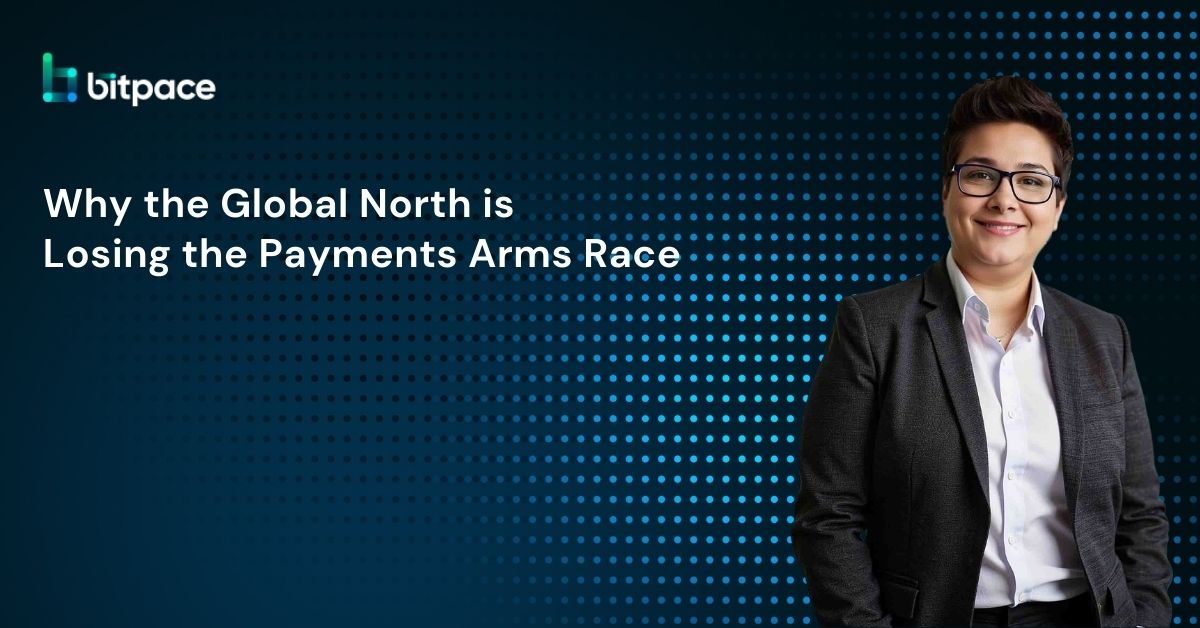

The traditional global payments narrative is obsolete. For decades, the West viewed emerging markets (EMs) as ‘catch-up’ economies, destined to eventually mimic the legacy banking structures of London, New York, or Frankfurt. In 2026, the reality is the inverse. While the Global North manages the ‘Inertia Tax’ of legacy systems, EMs have built a $3.47 trillion payments ecosystem from the ground up, designed for a digital-first, real-time world.
While developed economies are busy polishing the ‘front end’ of ageing systems, shaving seconds off a checkout or refining a UI, EMs have been forced to rebuild the ‘back end’ entirely. Out of necessity, Latin America, Africa, and Southeast Asia have leapfrogged traditional banking, turning stablecoins and decentralised rails from ‘niche alternatives’ into the primary engine of trade.
With 6.2 billion digital wallet users globally, the question for leadership in developed economies is no longer about supporting financial inclusion elsewhere; it is about whether they can afford the inertia of their own legacy.
From ‘Workarounds’ to Global Standards – the Liquidity Revolution
In stable economies, payment friction is an annoyance. In volatile ones, it is a solvency risk. This has turned stablecoins from a speculative asset into a $1.2 trillion foundational infrastructure for international commerce.
In 2026, despite the G20’s efforts, the global average cost for a traditional $200 remittance still hovers near 6%. Whereas stablecoin settlement has compressed that cost to under 1%. In fact, the actual stablecoin payment volumes reached $390 billion in 2025, more than double the previous year. This means that when an e-commerce merchant settles in stablecoins, they aren’t just ‘saving money’. They are optimising 5–9% of their working capital instantly. In a high-inflation world, time is the most expensive currency.
What does it mean in the real world? For an SME in Nigeria or an exporter in Brazil, traditional cross-border rails are a tax on growth. Often clawing back 6–10% in fees and trapping capital in settlement limbo for days. By shifting to stablecoin settlement, these businesses aren’t just ‘saving money’, they are optimising their working capital. When costs drop below 1% and settlement is instantaneous, capital’s velocity increases.
Developed markets often view crypto through the lens of speculation or regulation. Emerging markets view it through the lens of utility and margin. If the West continues to anchor itself to Swift and correspondent banking while the rest of the world moves on digital rails, the ‘developed’ world will eventually find itself holding the most expensive, slowest pipe in the global room.
Radical Interoperability – Breaking the Silo Mentality
The West suffers from ‘walled garden’ syndrome. We have highly sophisticated, yet isolated payment silos: banks, card networks, and FinTech apps that rarely speak the same language, requiring a dozen intermediaries.
Emerging markets have bypassed this by adopting Intelligent Orchestration. In high-growth regions, a merchant doesn’t care if a customer pays via a QR-based wallet, a local bank transfer, or a USD-pegged digital asset; the infrastructure is built to handle all of them simultaneously.
For instance, in Southeast Asia, where digital wallet adoption has surged by over 300% in recent years, ‘rail-agnostic’ infrastructure is the standard.
By 2026, 80 countries have launched domestic real-time payment (RTP) schemes. India alone now accounts for 46% of all global real-time transactions, proving that scale and speed are no longer the exclusive domain of Western card networks.
Flexibility is a competitive moat. The EM model proves that the future of finance isn’t a “winner-take-all” rail; it’s a fabric of interoperable layers. Leaders in developed economies must stop trying to protect their proprietary silos and start building for a multi-rail reality.
Programmable Trust: Compliance as an Operating System
The most dangerous myth in FinTech is that innovation and regulation are at odds. In markets where financial stability is fragile, ‘built-in’ compliance is a survival requirement.
EM-based digital asset platforms have had to pioneer automated KYC, real-time transaction monitoring, and transparent reporting frameworks just to earn the right to operate. They haven’t ‘bolted on’ compliance to satisfy a regulator; they have encoded it into the protocol to build trust in high-stakes environments.
In 2026, the integration of ISO 20022-rich data standards has led to straight-through processing (STP) rates rising, but only for those on modern rails. Legacy banks still face up to a 60% manual intervention rate on cross-border flows due to data fragmentation.
This is the blueprint for the next generation of Global North finance. As we move towards tokenised assets and CBDCs, the winners will be those who build the most programmable trust, not those who move the fastest
The Competitive Imperative – Inertia is a Risk
Legacy strength breeds complacency. When a system ‘mostly works’, there is little appetite for the systemic overhaul required to stay competitive. Emerging markets do not have the luxury of satisfaction. Their constraints have forced them to innovate at scale, creating a payments infrastructure that is faster, cheaper, and more resilient than anything currently running on legacy Western rails.
In 2026, ‘real-time’ is the baseline, and ‘programmable’ is the requirement. The ‘developed’ world needs to stop looking at emerging markets as a charity case and start seeing them as a mirror. The most resilient infrastructure will be the one with the most adaptability.